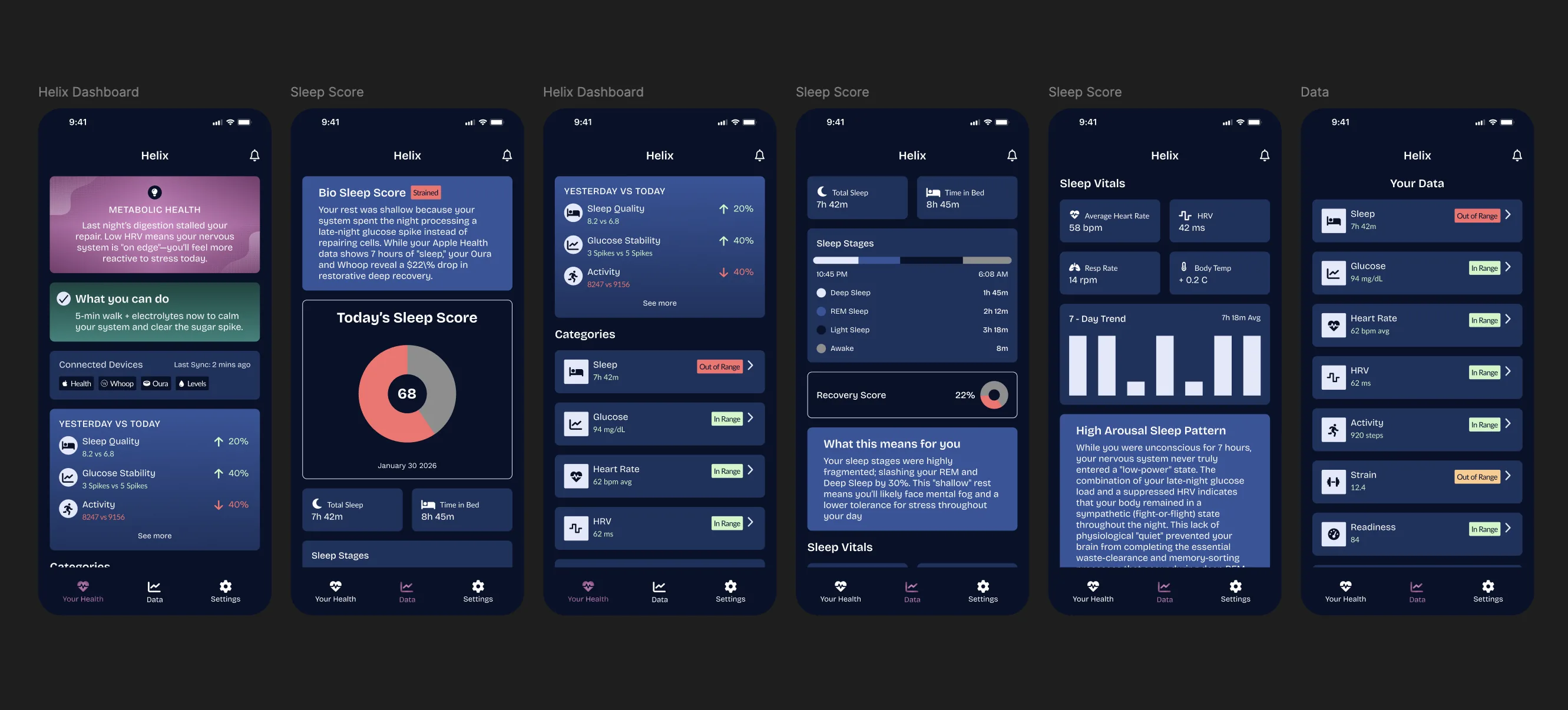
Redesigning the fragmented health-wearable ecosystem into a unified, AI-driven intelligence layer.
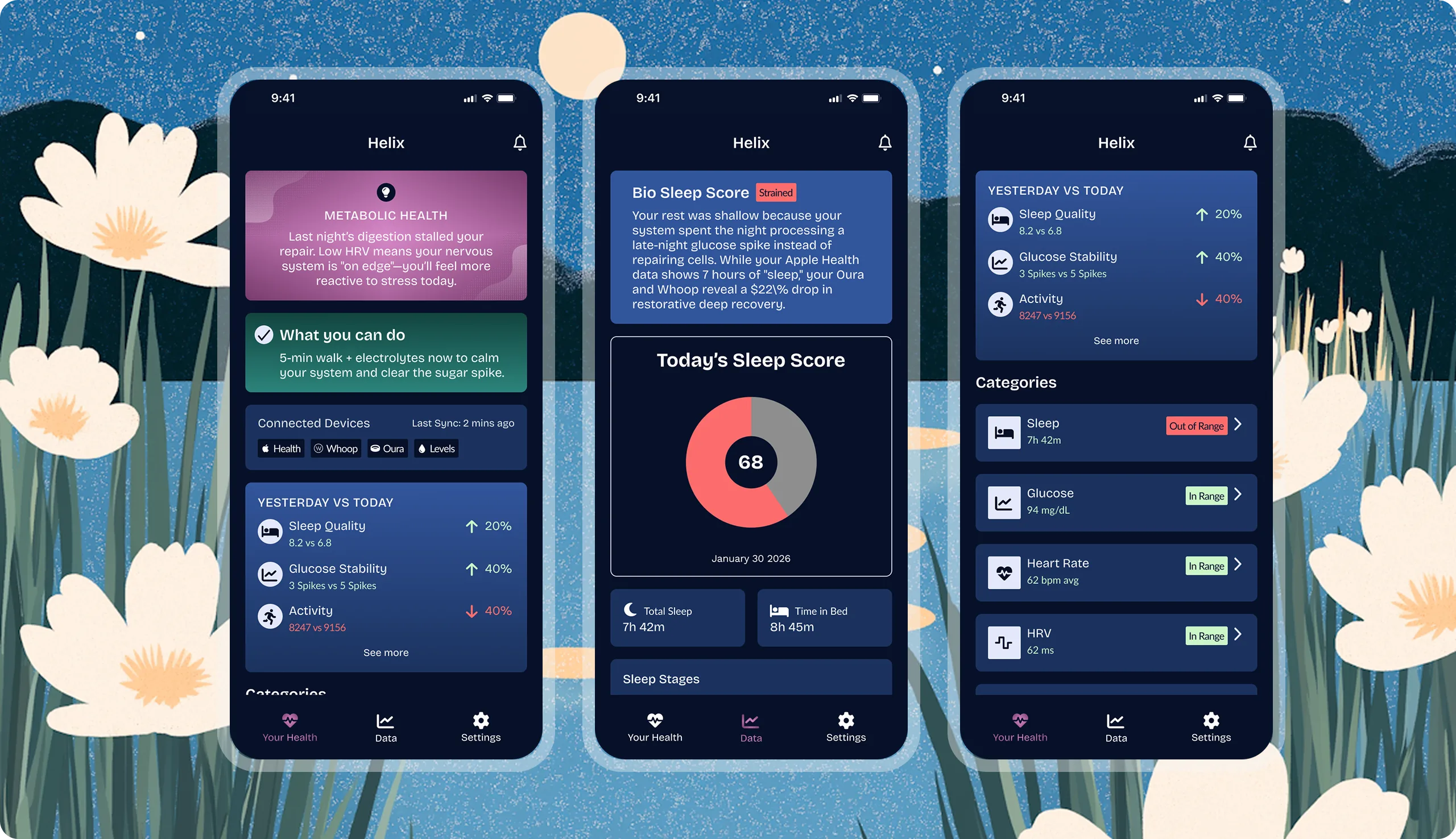
Health apps today provide a wealth of data but not much insight. Current platforms like Apple Health and Whoop function as "data warehouses"—they collect metrics but leave the heavy lifting of interpretation to the user.
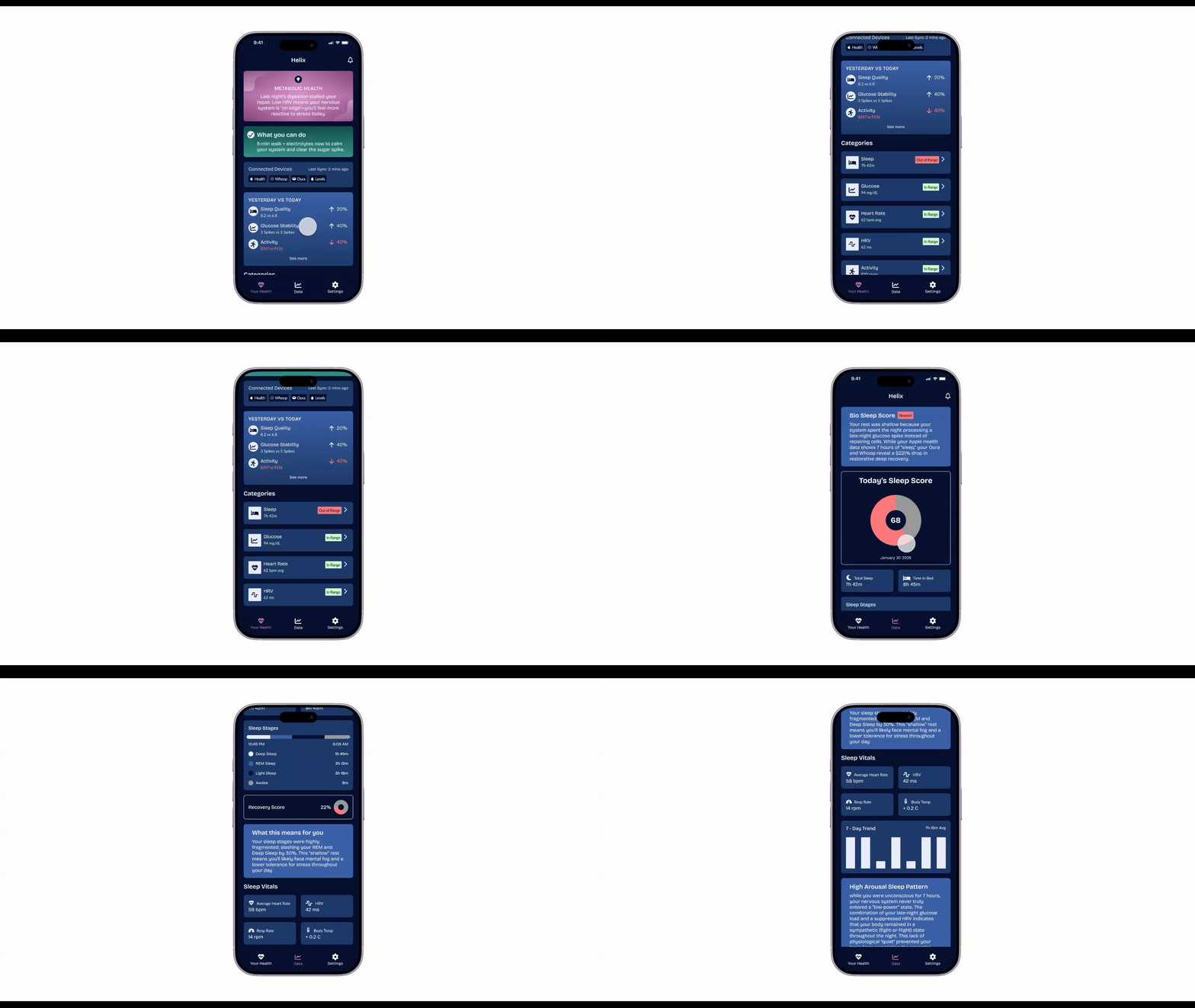
I addressed the "Siloed Data" problem by creating a unified Intelligence Layer that aggregates a user's entire bio-stack. By merging real-time physiological inputs with the user's lifestyle context, Helix provides Just-In-Time (JIT) Interventions, turning complex biological markers into simple, actionable coaching moments.
The first thing I did during the discovery phase was to conduct an audit of Health Metrics apps like Apple Health and Whoop. Our audit showed that current health apps provide plenty of raw data but fail to explain what it means. Users are left feeling confused and anxious because the apps use medical jargon instead of simple advice. These platforms act like a storage room for numbers rather than a tool that helps you make better daily choices.
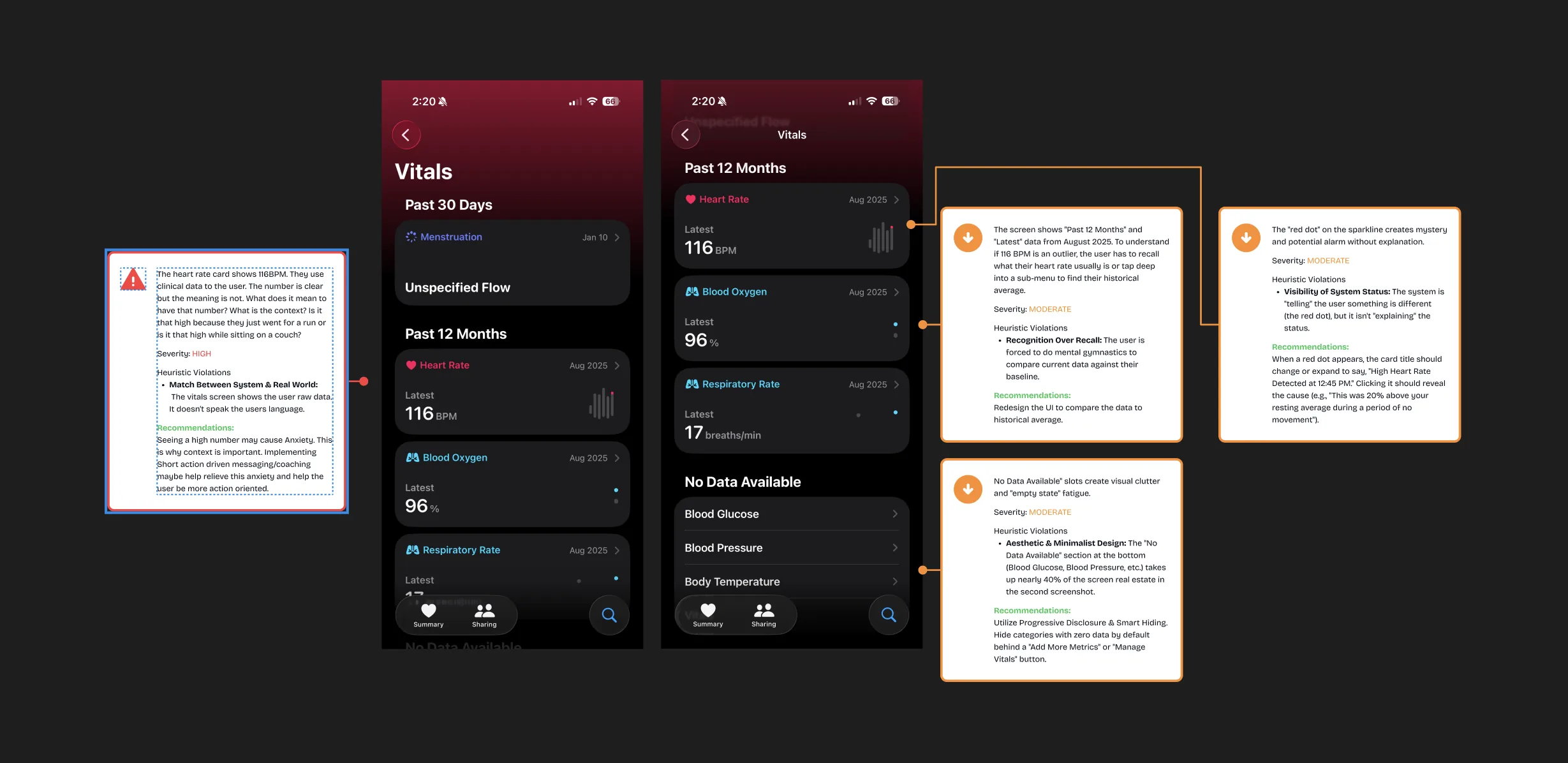
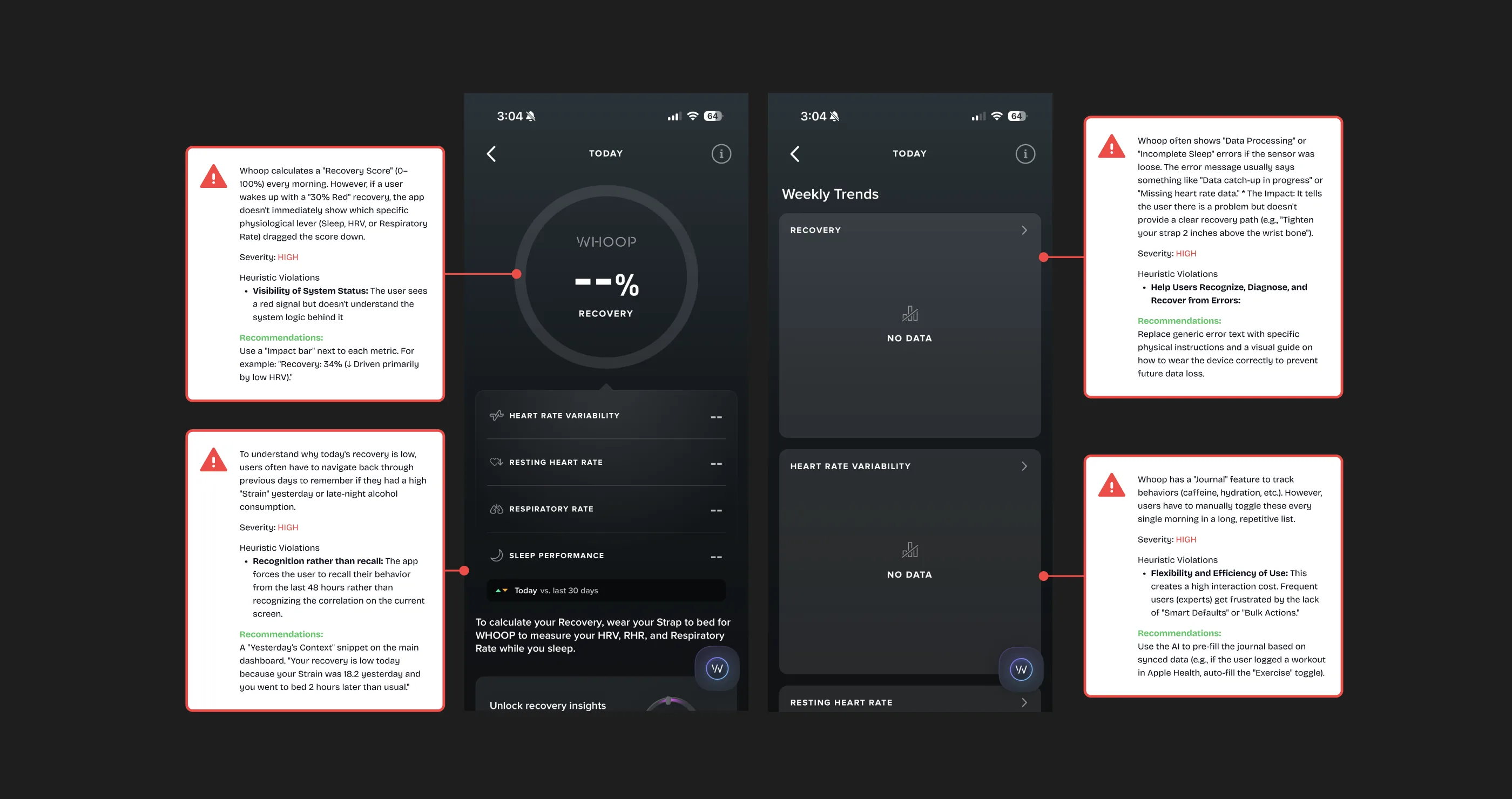
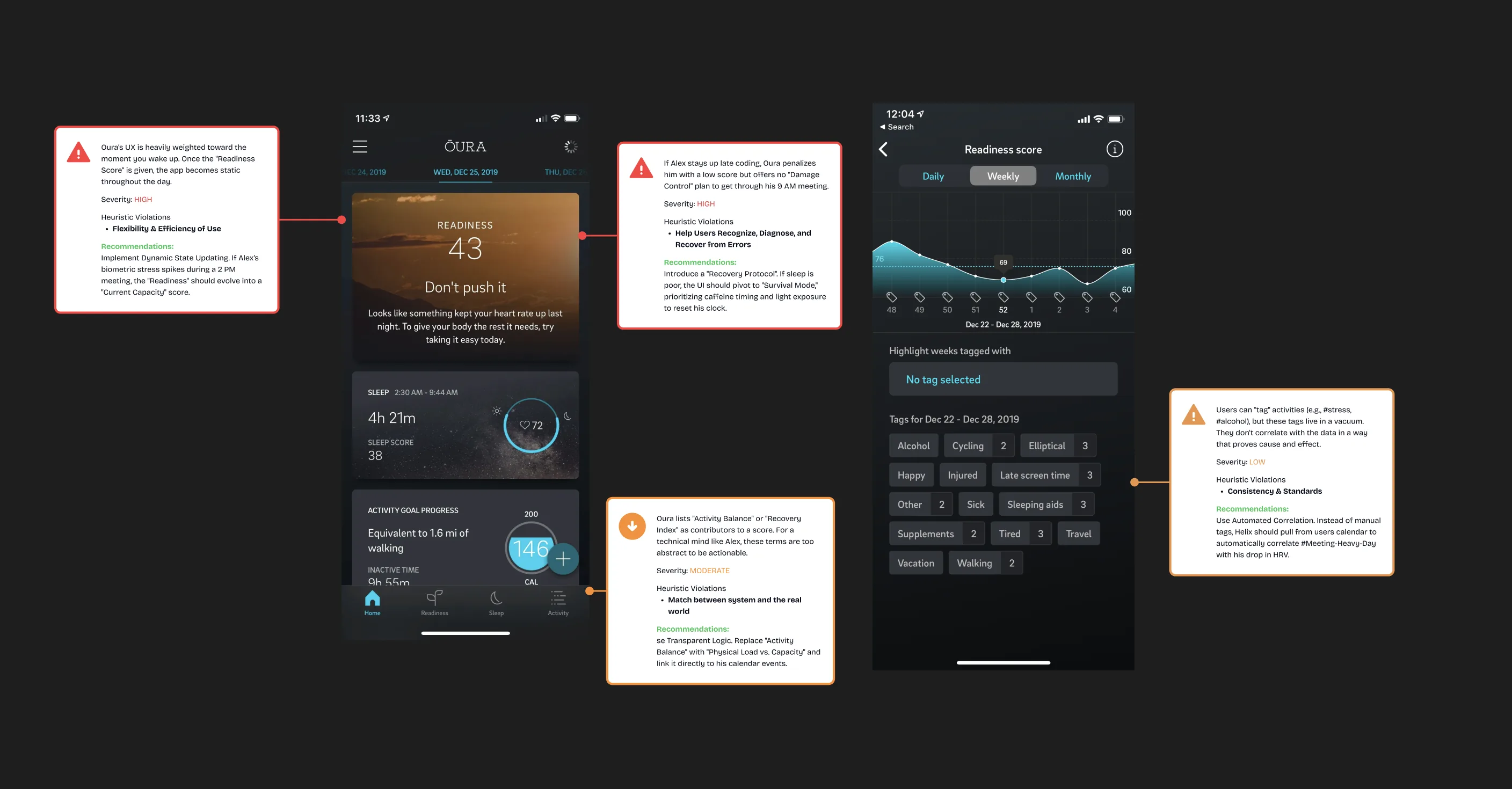
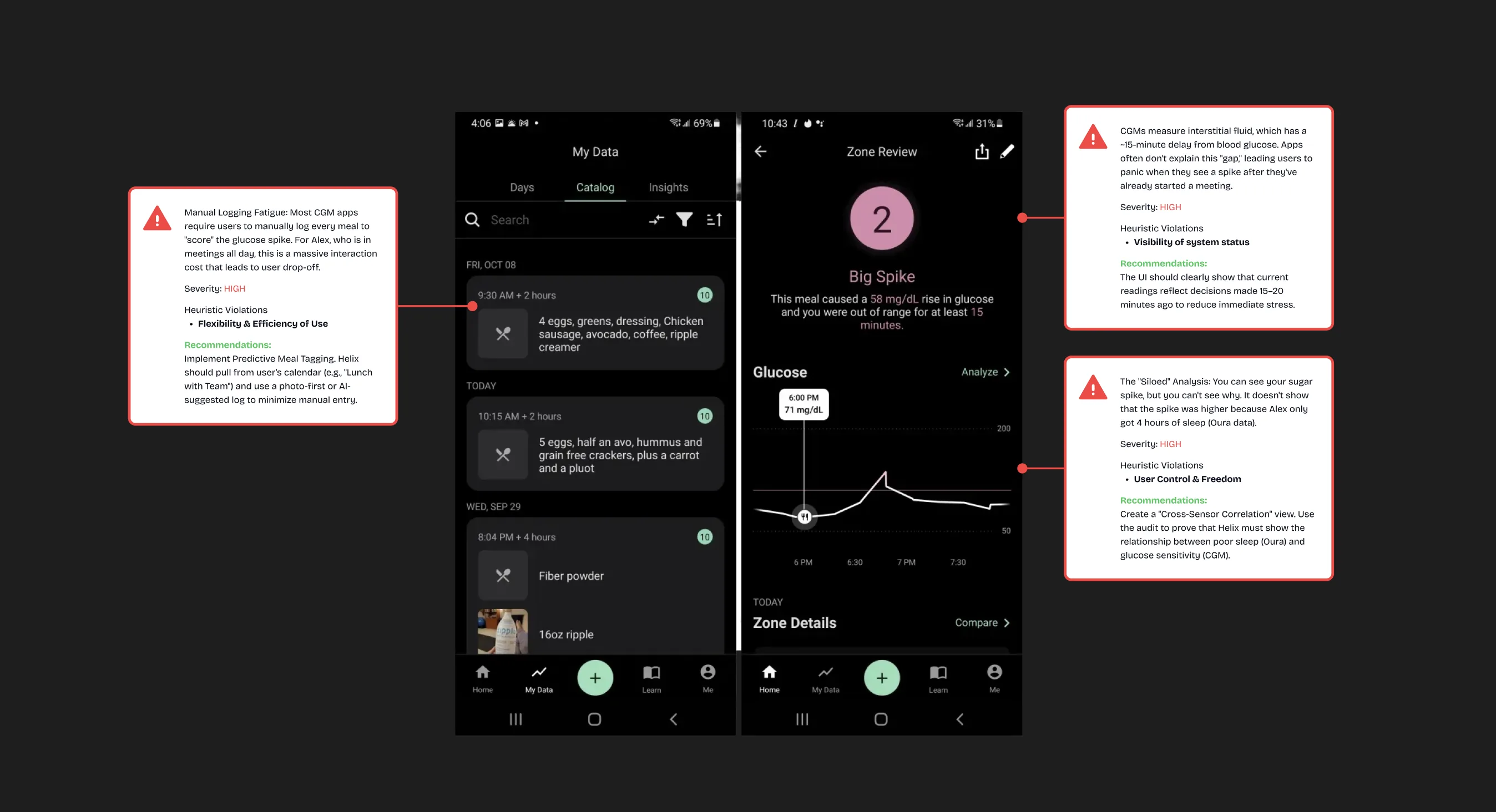
Apps act like "data warehouses," showing long lists of numbers without telling the user which ones matter most right now.
Interfaces use medical jargon (like HRV or mg/dL) that makes regular users feel confused or anxious.
Users have to jump between different apps to try and connect the dots between their sleep, stress, and diet.
Apps like Levels or Oura require users to constantly update their meals or tags which leads to abandonment.
Alerts are either too generic or too aggressive (red "Spike" alerts on CGMs for normal physiological responses).
Biometrics is not synced with the user's lifestyle context.
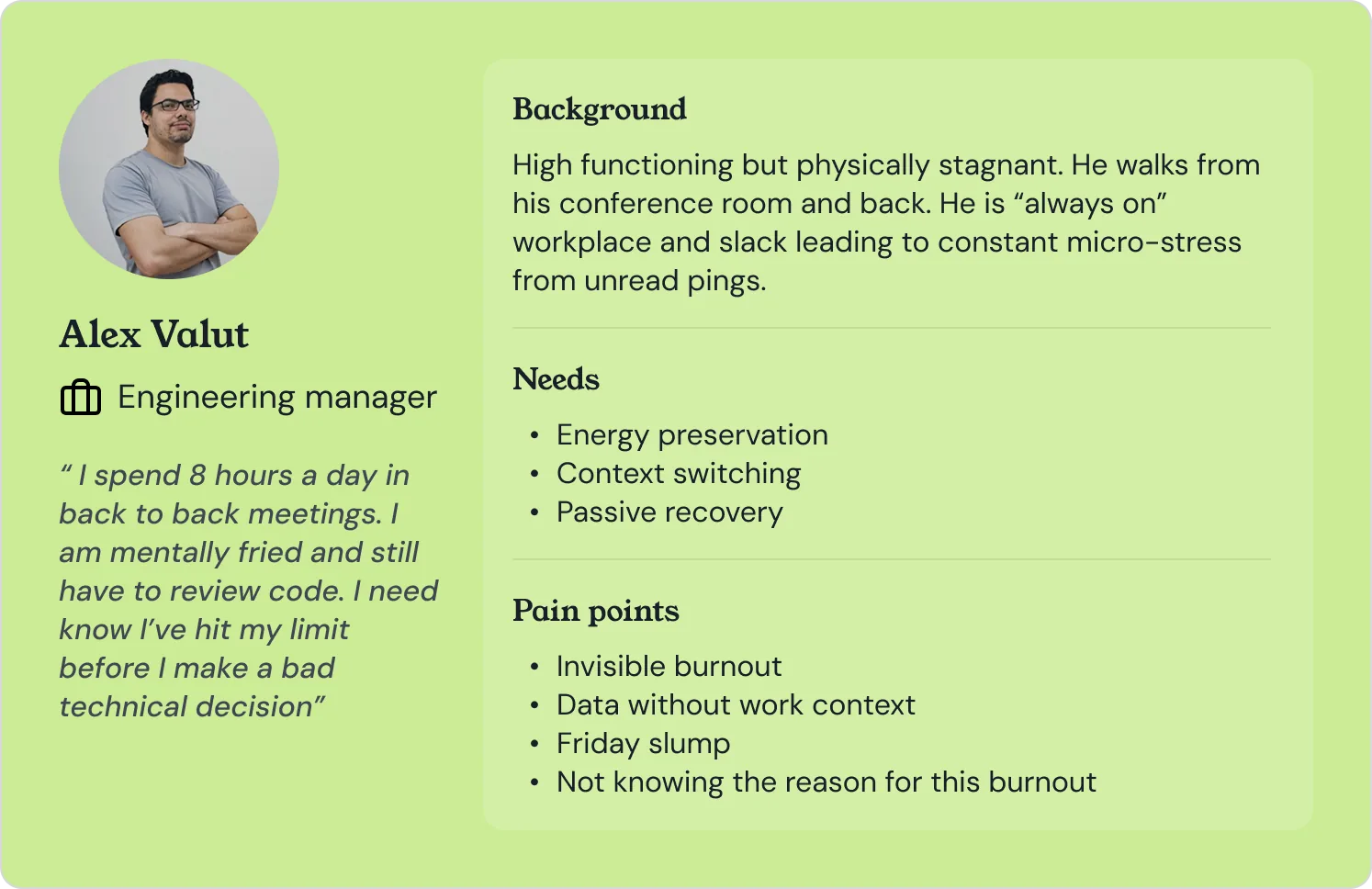
Our core persona is Alex: High-functioning but physically stagnant engineering manager at Orbital. He walks from his desk to a conference room and back. He's "always on" Workplace and Slack, leading to constant micro-stress from unread pings. Here is a breakdown of his persona:
To identify exactly where Helix could provide the highest value, I mapped Alex's biometric data against his daily work schedule at Orbital. This Experience Map allowed me to pinpoint 'The Cognitive Crash'—the specific window where his social battery depletes and his health metrics plummet—shifting our focus from general tracking to real-time intervention.
My initial research showed that users with multiple wearables (Oura, CGM, Whoop) suffer from 'Data Fragmentation.' I moved to wireframes with the goal of Sensor Fusion—consolidating disparate streams into a single, unified narrative. The design challenge was to solve Data Fatigue. I iterated through several layouts to find the best way to bridge the gap between 'Raw Data' and 'Actionable Insight.' I ultimately chose a Unified Narrative structure, ensuring that the Bio-Stack feels like a cohesive health partner rather than a collection of disconnected sensors.
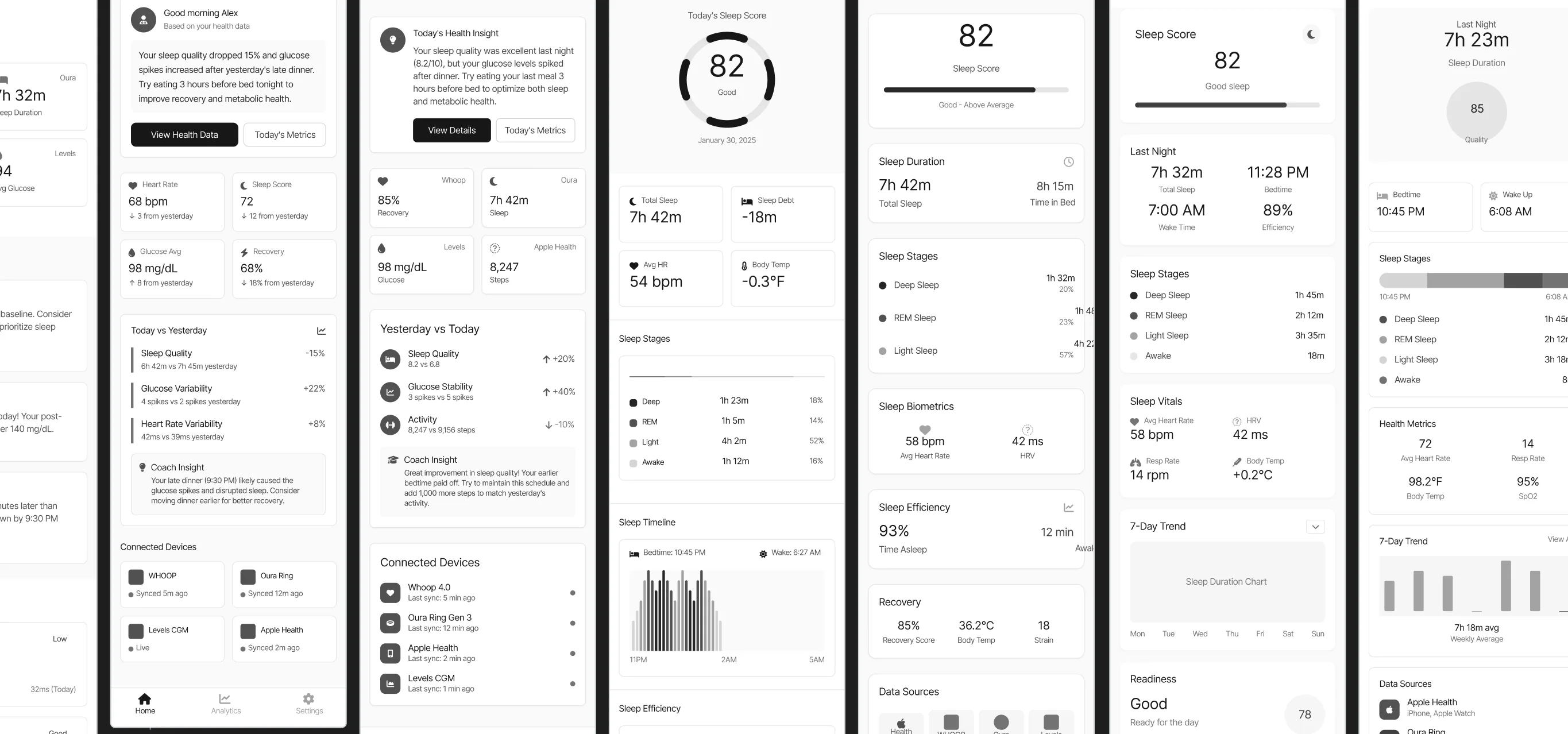
I turned a mess of confusing data from four different health apps into one simple, clear story. Instead of making the user jump between apps to check their sleep, heart rate, and blood sugar, I brought everything into a single timeline. This makes it easy for someone like Alex to see exactly how a late-night snack caused a bad night's sleep and a stressful morning. By focusing on 'Coachable Moments,' the app doesn't just show numbers—it gives clear, bite-sized advice on how to fix your day before it even starts.